Modular Backplane
SoftIron’s technology rests on a stateless hardware platform spanning firmware and the software layers above it. This bottom-up approach is necessary because traditional vertical stacks are fragile. By “lowering the skyline,” SoftIron enables end-to-end technology and production guarantees.
The SoftIron platform delivers resources through a multi-terabit backplane, allowing modular expansion across compute, acceleration, storage, and networking. Because these resources are native, nothing is diluted: every module runs the same binary, carries the same guarantees, and integrates with zero operational footprint. Scale is achieved simply by adding modules to increase resources, or by adding more servers.
Peers and Scale
Beneath SoftIron’s virtualizing cluster layer, each atomic resource is federated into a shared pool. Equivalent resources are treated interchangeably, enabling resilience and high availability. Scaling is unconstrained by topology or configuration; it occurs naturally by adding physical resources. Allocation and consumption are handled on demand, mirroring the public-cloud experience.
As a result, scaling is straightforward: every new resource becomes a peer. Expansion can be incremental (box by box) without batch integration or complex rollout processes. The Mystic Rose concept illustrates how peer-to-peer connectivity scales, while Topology Transcendence explains how this frees performance from conventional constraints.
Mystic Rose

Scaling with SoftIron is straightforward because it is fundamentally a resources problem. Performance at scale must improve without increasing operational or deployment complexity; otherwise, you revert to managing infrastructure and lose the benefits of virtualization.
This is where the “Mystic Rose” concept applies. With atomic resources treated as peers (even as multiple peers within a single server), graph theory provides a natural scaling advantage. As node count n increases, peer-to-peer connectivity increases as n(n − 1)/2, enabling aggregate throughput to rise faster than linear scale, thus meeting demand with minimal deployment of resources.
A practical contrast is traditional storage architectures that rely on targets, head-ends, gateways, and other choke points. In a peer-based model, all storage resources participate directly. Data is distributed across the pool, allowing performance and resilience to scale together. As the pool grows, operations simplify and overall system behavior improves.
Topology Transcendence
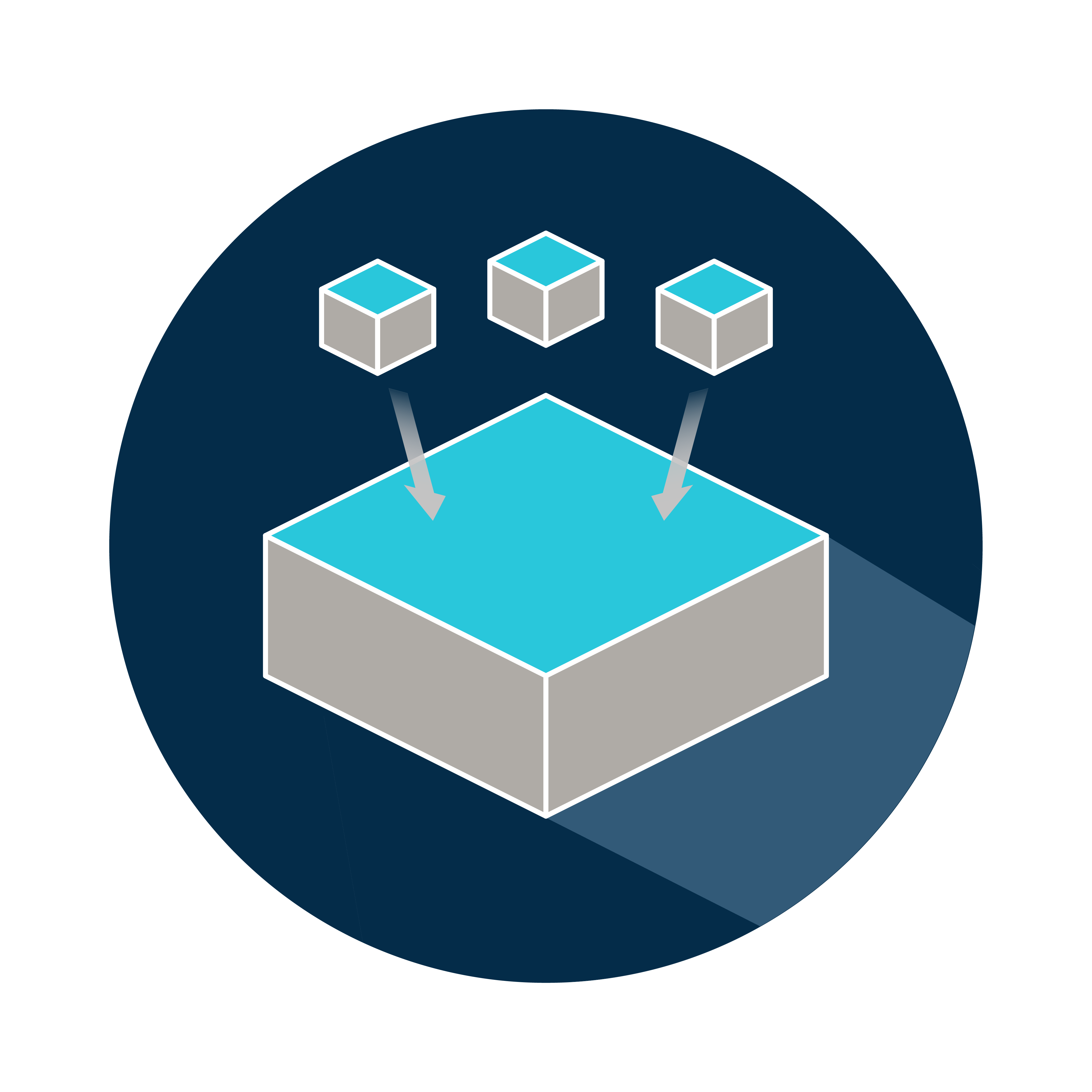
Storage is rarely virtualized as a true resource. More often, “storage virtualization” is implemented as a gateway or protocol layer running in virtual machines. In that model, underlying hardware characteristics become hard limits: memory-to-media ratios, RAID card performance, processor load, and network constraints. Performance is chained to the size of the “pipes and pumps.”
SoftIron’s architecture is the opposite: it virtualizes the raw resource itself for shared, parallel use at every layer.
The result is that performance, scale, and high availability are not constrained in conventional ways. As both consumers and resources increase, deployed improvements reap better than linear returns; each participant benefits disproportionately from added resources. This creates a compelling case for consolidation: reduce complexity while increasing scale and improving outcomes. The broader strategic implication is the answer to the “CIO’s dilemma” discussed elsewhere.